

Link building earns you third-party validation, and that endorsement will always matter when your overall visibility, both in SERPs and AI results, is at stake.
Yet one of the biggest controversies around link building is whether all tactics used to earn those links are equally safe and valuable.
The short answer is no. Even though there’s no question about how beneficial backlinks are, how you earn them matters.
Years spent building links taught me that some techniques are always better for long-term SEO value than others, and the best ones fall under white hat link building.
In this article, I will explain what white hat link building is, how it impacts Google rankings and AI visibility, and the best strategies SaaS companies can use.
White hat link building is the process of earning editorial backlinks through useful content, public relations, original research and genuine business relationships.
The link must serve a reader-facing purpose, and any compensated placement should be appropriately qualified in accordance with Google’s spam policies.
However, there is a reason people resort to risky schemes. White hat link building requires the most effort compared with gray or black hat approaches.
“White hat SEO is a ton of work, and there are no shortcuts. While it’s more work, white hat link building provides better results. If you put in the time and effort, your results will reflect it,” says Ryan Stewart.
From my experience in link building, I’ve seen people build links in all sorts of ways, and not all of them fall under white hat practices.
Link building tactics are usually split into three “colored hats” — white, gray, and black. Each comes with different levels of risk and value, which I’ll explain in the next section.
White hat, gray hat, and black hat link building differ based on how links are acquired, their purpose, the value they offer users, and the risks they pose to websites.
White hat link building earns links naturally through business relationships and useful resources. Gray hat uses tactics that fall into a more uncertain area and carry some risk.
Meanwhile, black hat relies on manipulative methods to influence rankings rather than benefit users, creating higher risks for the website.
Take a look at the table below to compare each approach.
That said, my #1 recommendation is to steer clear of black hat techniques. They are not worth the hassle, especially since any rankings or traffic gains they provide are often short-lived.
While buying backlinks isn’t automatically a black hat tactic, how those links are acquired defines which hat the practice falls under.
The key here is to avoid providers that sell links purely for ranking manipulation. Instead, go with providers that build links through outreach, digital PR, and relevant placements.
A backlink is safe and worth building when it signals quality through authority, relevance, and value.
Before pursuing any backlink opportunity, I use a clear set of criteria to determine whether a backlink brings any value.
When an opportunity checks every item on this list, it tells me the link is worth pursuing.
I already covered the full backlink evaluation process I use. Make sure to check that out if you want a deeper breakdown.
The best white hat link building strategies for SaaS companies are ethical methods of earning backlinks through editorial placements, outreach, and relevant relationships.
Here are five SaaS link building strategies I recommend most.
SaaS-to-SaaS links are backlinks earned between software companies that serve overlapping audiences or solve related problems.
Since these links come from relevant sources, the stronger topical connection can make the backlink more valuable.
For example, a backlink to an identity verification platform carries more relevance when it comes from a fintech, compliance, or fraud prevention article than from an unrelated high-DR lifestyle blog.
The referring website, page topic, and surrounding context all help reinforce what the target page is about.
According to Aira’s survey results, most SEOs think a relevant niche is the most important factor influencing organic results.

That’s why the strongest link placements for SaaS companies often come from websites that serve a similar audience or solve a related problem.
In other words, SaaS-to-SaaS link placements help you build topical authority. Such authority helps you rank.
The challenge is that this approach depends on strong partnerships.
One of the best ways to find them is by joining link building Slack communities where founders and marketers in your niche already collaborate.
Relevant niche edits are backlinks added to existing content pieces that closely match your product or its use case.
That means your link sits naturally within the article, supported by useful, informative anchor text. It should feel like a resource that helps readers better understand the topic being discussed.
This is also how many professionals evaluate relevance. BuzzStream found that 62.2% of professionals consider page title and anchor text the top ways to assess whether a link is relevant.

Listicle placements are particularly valuable for SaaS companies because software buyers often want to compare their options before making a decision.
Buyers commonly turn to comparison-style resources, including “top” and “best” articles, to do that.
A contextual link from a relevant listicle can help search engines associate the linked page with the product category discussed in the source passage. The link may also transfer PageRank and generate qualified referral traffic.
They can also help improve AI visibility. Peec AI’s analysis of nearly 200,000 AI responses, including data points across B2B SaaS, supports this.
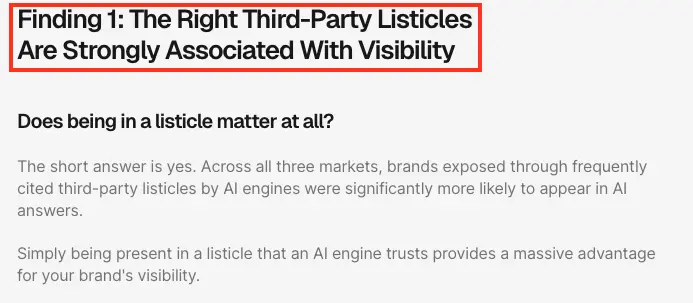
According to the report, being featured in third-party listicles cited by AI tools can increase your chances of appearing in AI-generated responses by strengthening your brand’s association with a relevant category.
Brand mention link building focuses on earning new brand mentions and converting unlinked brand mentions.
Even without a link, brand mentions can still build awareness around your brand. Editorial.Link’s survey found that 80.9% of SEOs believe unlinked mentions affect organic rankings.

Still, you can maximize the SEO potential of these mentions by turning them into links. That makes brand mention link building a strong, creative white hat strategy.
At the same time, I recommend using this approach carefully. Monitor where your brand is being mentioned, and assess whether adding a link would be useful in that context.
Do not waste your link building outreach efforts if the backlink wouldn’t add value for your brand or the reader.
Creating original data and linkable assets are among the strongest white hat link building tactics because they provide unique resources that websites often find worth citing.
According to BuzzSumo’s analysis of content that gets shares and links, original research and related reports are better at acquiring backlinks than viral content.
This can include research findings, survey results, calculators, statistics pages, and interactive free tools, especially when they solve a problem related to your product.
White hat link building helps improve Google rankings by earning contextual links from trustworthy pages that are closely related to the topic of the linked page.
When a relevant source page links to your content within a meaningful passage, the link helps search engines understand the relationship between the two pages, their entities, and the topics they cover.
Unlike gray or black hat link building schemes, the white hat approach helps you earn placements that are useful for readers and fit naturally within the surrounding content.
This can strengthen the linked page’s topical relevance, improve its discoverability, and contribute to the website’s overall authority without relying on patterns commonly associated with link spam.
White hat outreach supports AI visibility when it earns substantive third-party coverage of the brand. Inclusion in relevant listicles, comparisons, and industry guides creates explicit associations between the brand, its product category, use cases and differentiators.
When AI systems retrieve those sources, these associations can increase the likelihood that the brand is considered for a related response.
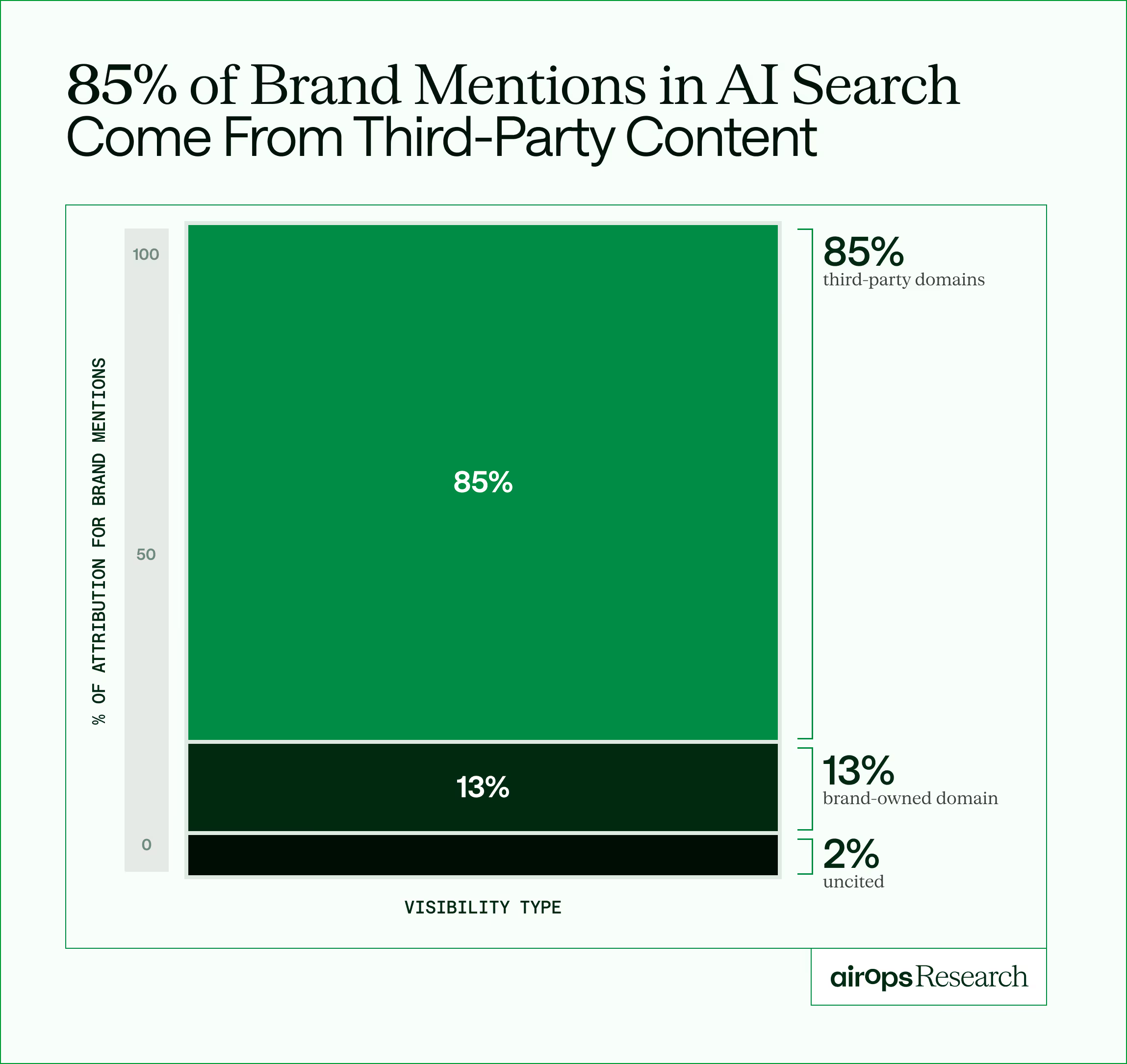
AirOps’ research supports this. According to the data, 85% of brand mentions come from third-party sources, with brands being 6.5x more likely to be mentioned through third-party sources.
Let’s say an AI Overview cites a third-party article like “Best CRM Tools for Small Businesses.” The AI answer may mention HubSpot, Pipedrive, and Zoho because they appear in that article.
The catch is that the visibility goes to those brands, not necessarily to the website that published the article.
That’s exactly why white hat link building helps with AI visibility. It places your brand in the sources AI systems already read, cite, and summarize.
Legitimate, ethical white hat link-building services help you earn links through real outreach. They secure editorial placements through useful content, PR, and partnerships.
A good manual link building service uses 100% white hat techniques and prioritizes relevance, editorial quality, and reader value. Those are the providers you want to trust.
Simply put, these services focus on links that make contextual sense and align with Google’s webmaster guidelines.
On the other hand, I’ve seen plenty of agencies claim to be legitimate when they are not. In reality, these services often show obvious red flags you should watch out for.
If you’re looking for a B2B SaaS link building agency that uses white hat techniques to improve rankings and AI visibility, I can help.
At saaslinkbuilder, I use strategies that are white hat and provide long-term SEO value to my clients. If that’s what you’re looking for, let’s chat.
Yes, white hat link building is the safest way to build links. Tactics that fall under this approach usually rely on relevant outreach, useful content, and editorial placements, which are strong indicators that they follow Google’s guidelines.
No, paid links that pass ranking value are not considered white hat. Google usually treats them as spam unless they are qualified with “sponsored” or “nofollow” attributes.
No, backlink marketplaces do not offer white hat link building. Instead, they sell access to link placements, which means anyone who pays can acquire a placement.

Article by
Mykolas is the founder of saaslinkbuilder and has built over 5,000 high-quality links for SaaS companies. He got his start working with top Lithuanian SaaS brands and now shares insights on link building, content marketing, and SEO.

Book a Free Consultation

saaslinkbuilder is a SaaS link building agency for Google & AI visibility
Copyright 2026 - saaslinkbuilder
