

Link building without outreach is just wishful thinking.
To sit back and hope others link to your pages is an option. But that’s a painfully slow and unpredictable route to take. Often, it’s a bad bet if rankings matter.
It’s because backlinks remain one of the most reliable signals of authority that Google can measure. They’re endorsements that show your content is worth citing.
And that carries a lot of weight for Google.
More referring domains often correlate with higher rankings, according to Backlinko.
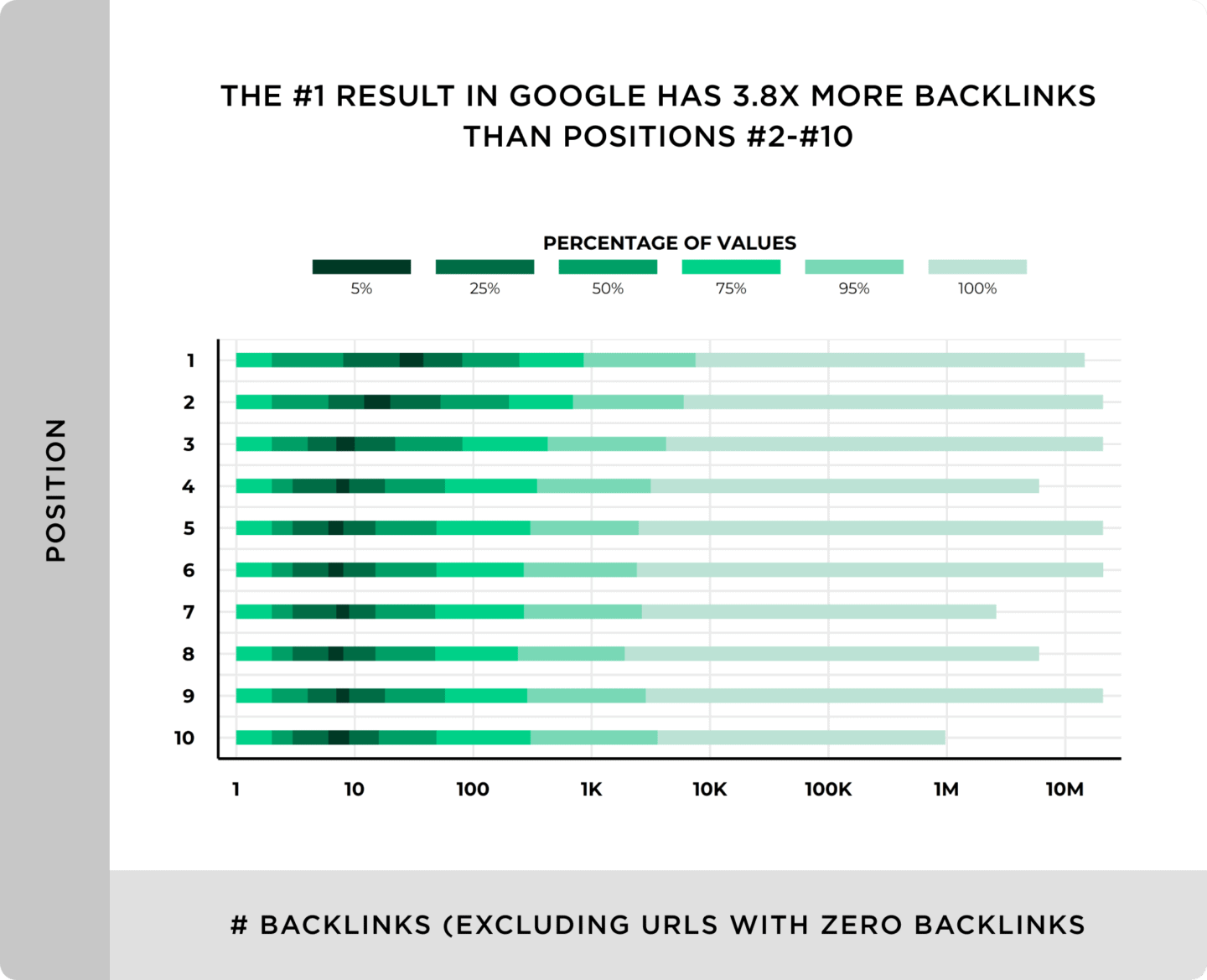
Pages with more referring domains tend to outperform pages with fewer.
What does this leave us with? Backlinks are important, and outreach is the intentional effort you should expend to rank higher in SERPs.
But where do you begin? How do you proceed with outreach, and which strategies are trending right now in 2026?
I’ll answer all that in this guide and share templates that will help your link-building strategy.
Link building outreach is a process of sending a targeted message to a website owner or an editor, requesting a link placement for your content
The goal is simple. Build relationships with website owners and offer valuable content. Done right, that effort can earn links back to your site.
But outreach is the part that humbles everyone. You cannot just go around asking people to link them to you.
At best, you’ll be another email lost in the inbox of a busy website owner or editor.
Only a fraction of all outreach emails ever receives a response. Backlinko’s outreach study backs this up, too.

Link building outreach takes a plan if you want success. And it’s hard to build a plan until you know which channel you’re using.
Emails are still the most common for outreach. Editors and site owners already expect to find pitches in their inboxes.
Slack is another story. Instead of cold DMs, you join the right communities and contribute first. Then, watch for opportunities where your content is genuinely helpful.
If you’re not in any communities yet, I’ve built the saaslinkbuilder slack link building community as an easy first step.
LinkedIn is a whole different approach to outreach. You engage with others’ content, connect, and then present your pitch with context.
In 2026, link building is less about collecting backlinks. Instead, it’s more about earning the right kind of citations.
With AI search in the mix, visibility does not only come from ranking pages.
Authoritas’ research shows that in AI Overviews, 62% of cited links do not match any of the top 10 organic URLs.
Across a large set of keywords, only a small share of AI citations are exact matches to page-one URLs. Another portion comes from the same domains ranking in the top 10, but points to different pages.
The graph below visualizes how much AI Overview links and page-one organic results overlap.

What does all this mean?
Ranking on page one doesn’t guarantee visibility in the AI Overview.
AI systems don’t limit themselves to the top organic URLs when generating answers. Relevance and context outweigh ranking position, so citations often come from a wider set of sources.
In other words, where you’re mentioned and how your brand shows up in that context matter now more than ever for both classic SEO and AI-driven search.
That’s why you need a strategy for link building outreach. Gone are the days when people could just chase links. Now, placing your brand in the right conversations is a must.
There are two distinct link-building methods that you can include in your strategy.
First is to build links without content. You earn links but don’t publish anything new through…
The other is the content-driven link building. You earn links because you provide the content that gives someone a real reason to cite you. For example…
I’ve seen link building outreach processes evolve in real time. What worked two years ago is already getting ignored today.
Here’s the step-by-step outreach process I use for SaaS link building and will work in 2026.
There are a few reliable ways to find good sites for backlinks.
How you find them depends on the link-building method you’re using. A site that’s a good fit for PR-style links might be a bad fit for guest posts.
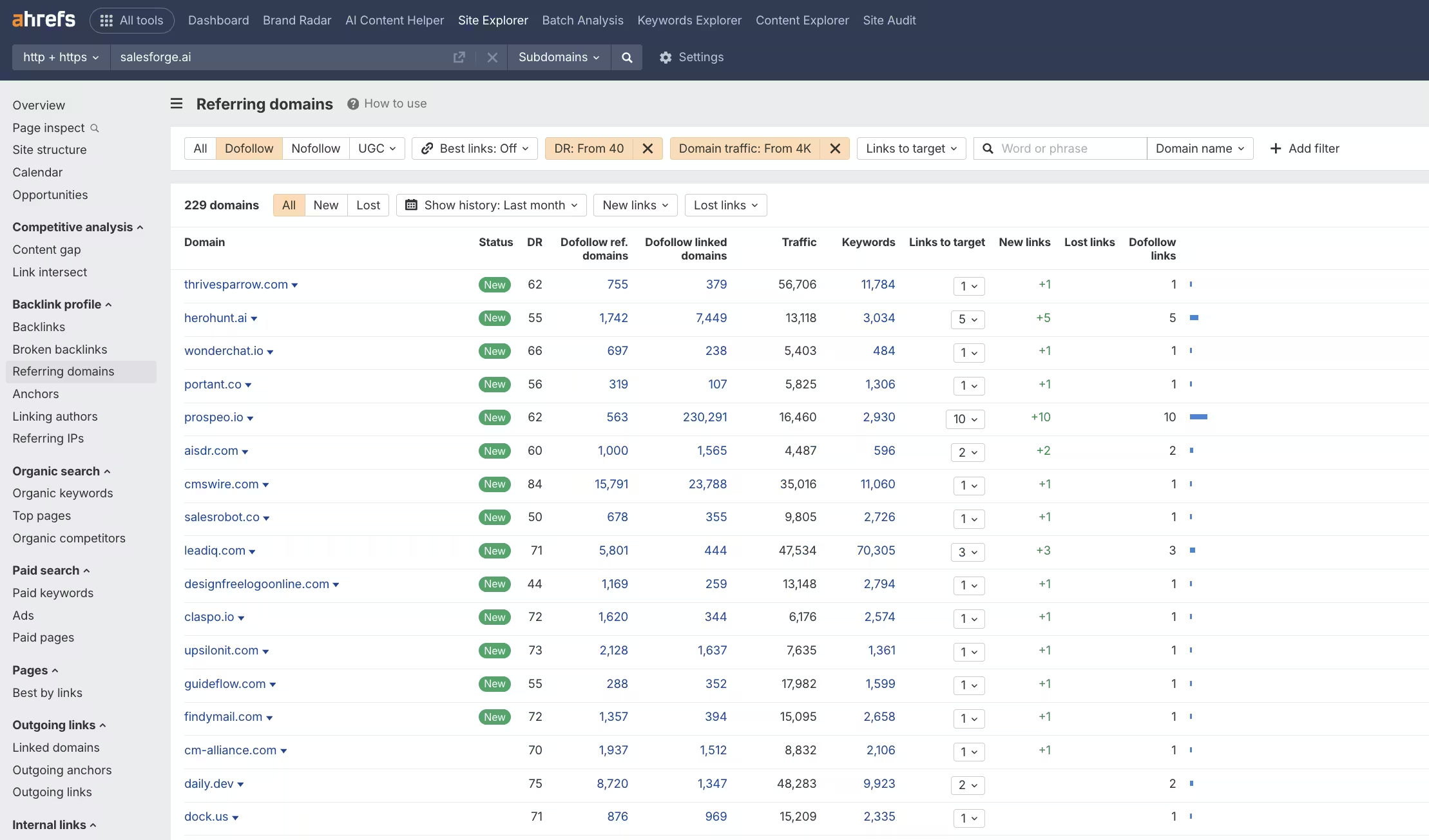
If you’re after link insertions, pull your competitor’s referring domains in Ahrefs or Semrush. Then, shortlist the sites that are topical and relevant.
This works because if a site already links to your competitor, it’s an attention-worthy outreach target. After all, it has a track record of citing solutions in your space.
But if what you’re going for are guest posts, then you need to check who publishes content in your niche. Ahrefs’ Content Explorer is great for this specific task.
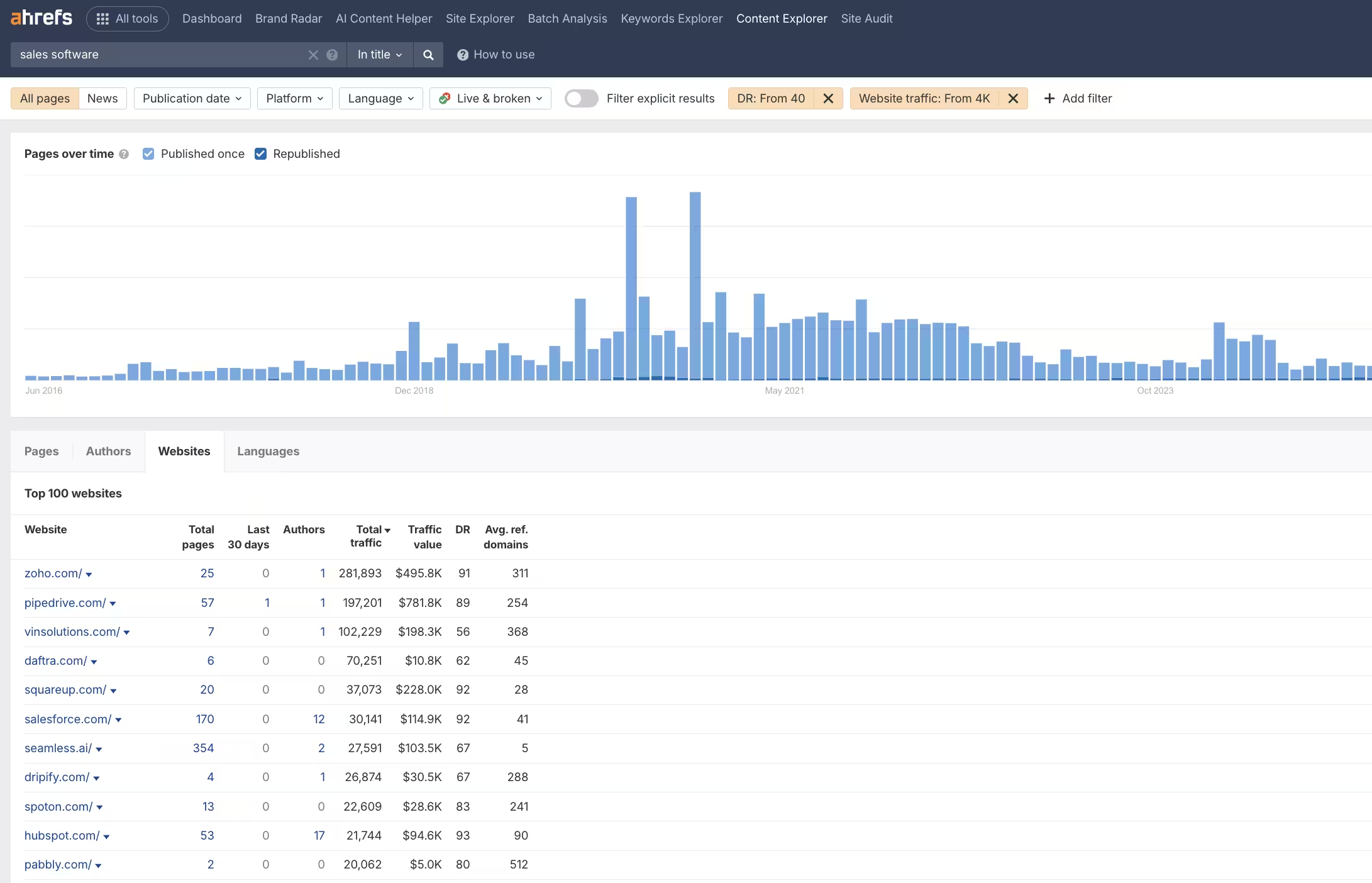
Search the topics you want to focus on, then narrow results to websites that get real traffic and match your audience. Then, export the best fits.
These barely scrape the surface of discovering the right websites. There are many ways to do it, but the goal is to find prospects that are relevant and likely to add your link.
You have a list of promising websites. Now you have to weed out the bits. Contacting every single one of them won’t yield good results.
You need parameters to evaluate your list, because outreach only pays off when the target is worth winning.
Set a vetting routine, then follow it without exception. At saaslinkbuilder, I’ve set standards to keep quality high across every campaign.
Start with relevance. If the site is off-topic, the link is unlikely to send qualified traffic, and it may not move rankings.
Metrics like domain rating (DR) are fine as a quick filter, but they should never be the final decision. You need to take organic traffic into account, too.
It’s because a site can have a high DR and still get zero organic traffic.
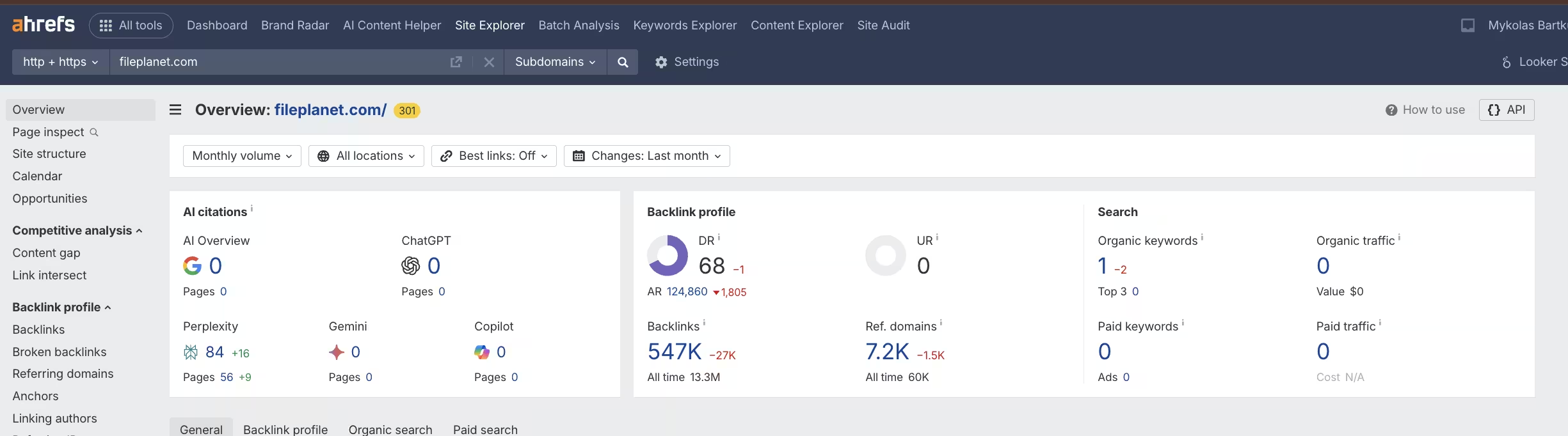
Skip sketchy sites and low-effort blogs, even if they promise an easy link. Strong placements take more effort, but they’re the ones that actually deliver results.
Scraping emails and contacting everyone on your list is not how you outreach.
Figure out who the decision maker is. I usually start on the page itself. If there’s a byline, the author is usually the first person to try.
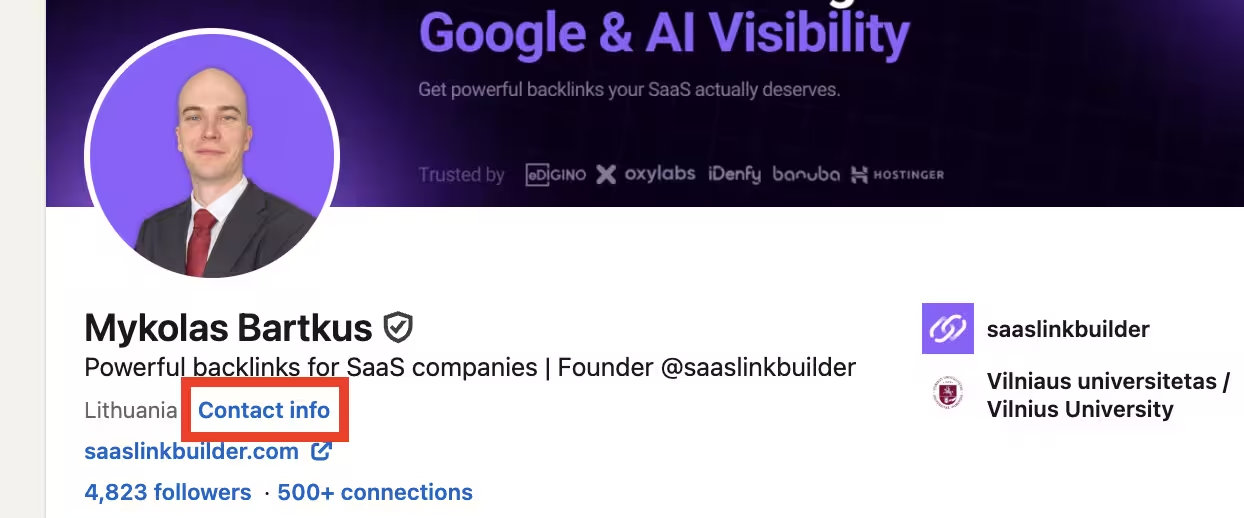
If it’s a company website or a blog, LinkedIn is awesome to scout for emails. I look for content managers, editors, SEO specialists, and marketing leads, because they’re usually the ones who can say yes.
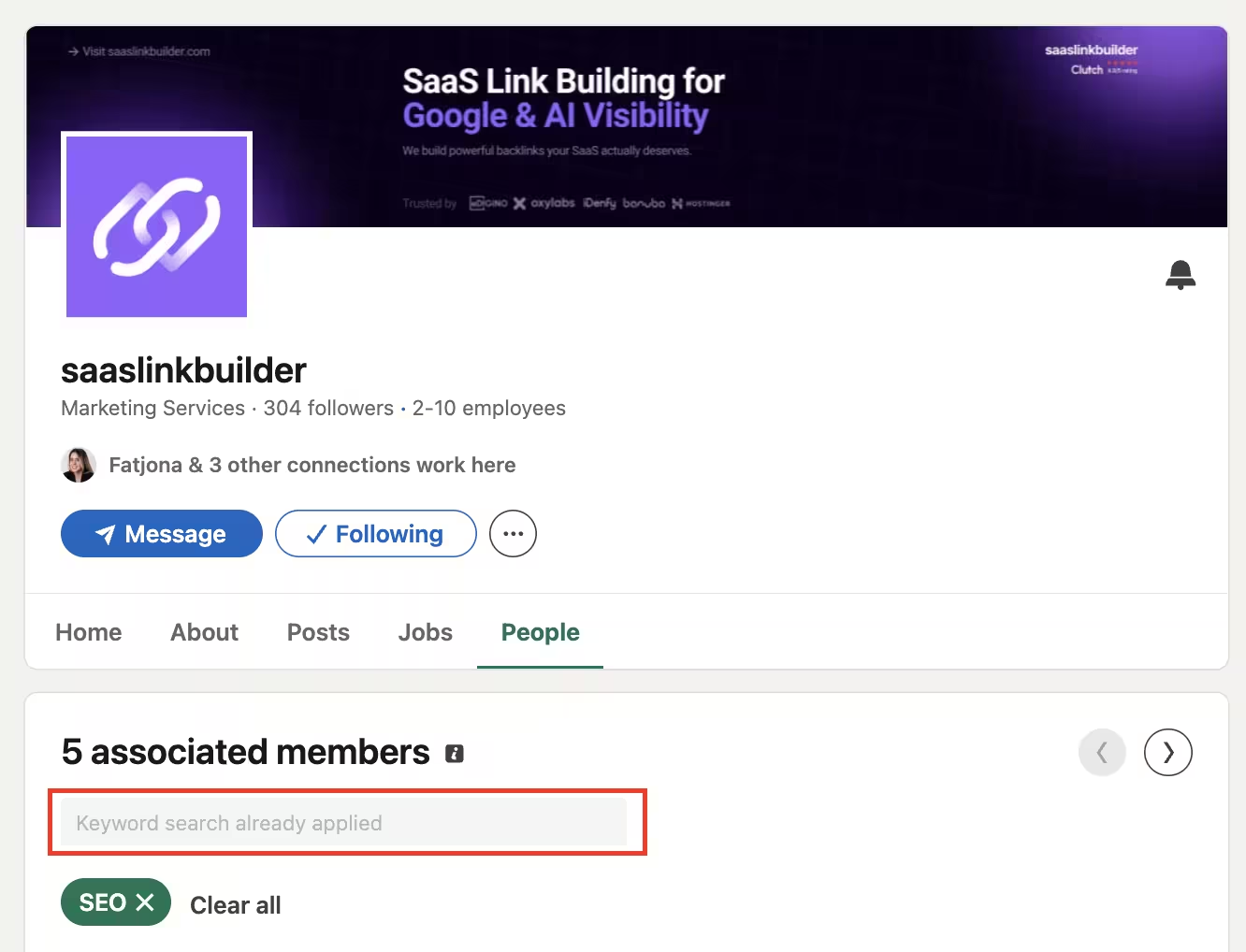
Then, from their profile, I click contact info and fetch their emails.
For smaller businesses, I often go straight to the founder or CEO. They’re still close to the site, and partnerships rarely need five layers of approval.
You’ll outreach the wrong person sometimes. That’s normal. Spot it fast, get redirected, and don't waste a week on follow-ups that were never going to land.
Though the wrong prospect isn’t the only issue here. Does this seem familiar?
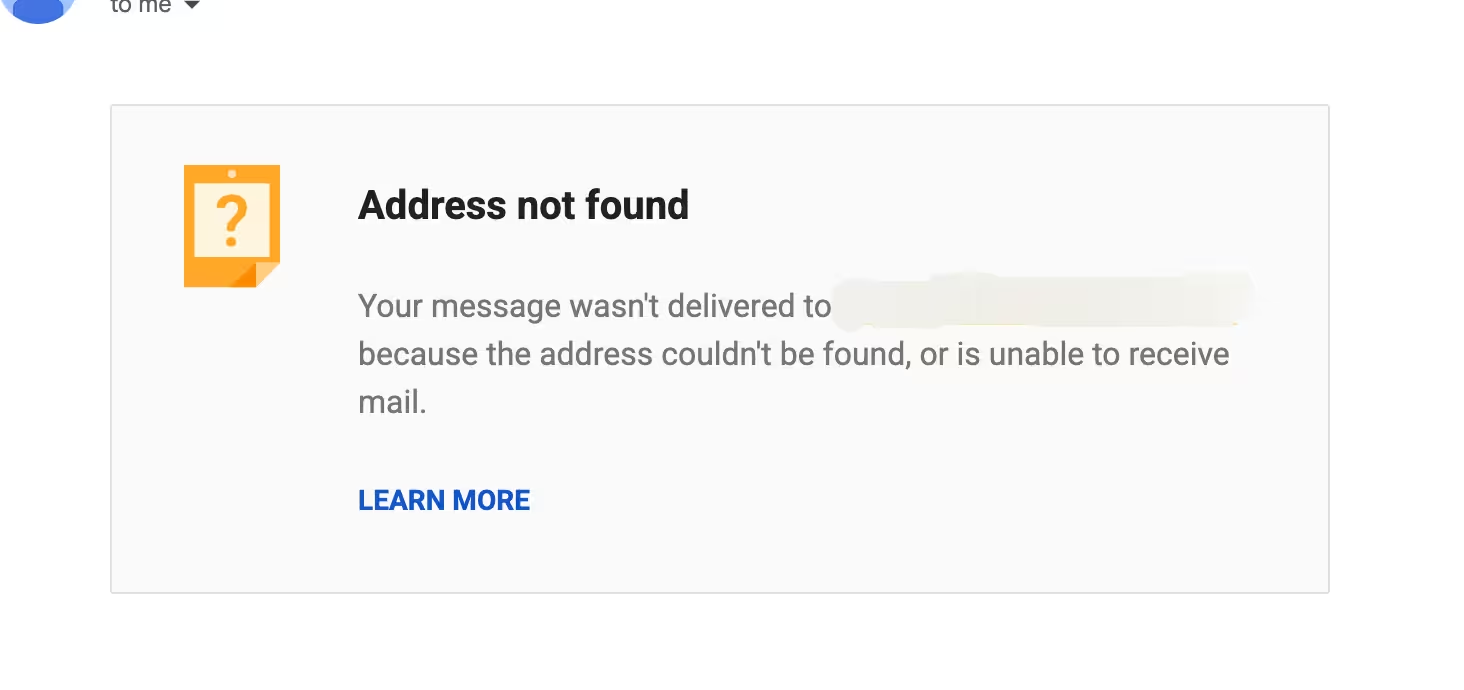
To avoid emails from bouncing back, I verify each and every email before I send anything. Use email verification tools to confirm whether an address is valid.
This step protects deliverability and stops future campaigns from landing in spam.
A smaller list of verified contacts, instead of a bloated spreadsheet, gives you a higher chance of getting replies and placements.
This is where most link-building efforts fall apart, and I’ve learned that the hard way.
Not because my prospect list was bad or my emails were bouncing left and right. Because earlier in my career, the messages I crafted didn’t stand out from the crowd.
Most editors and site owners can spot a generic pitch instantly. If your email could be sent to fifty other sites without changing a word… I’ve got bad news for you.
I found that crafting a personalized outreach message works the best, and I’m not alone in this.
Backlinko’s outreach study found that emails with at least one personalized detail get more replies.
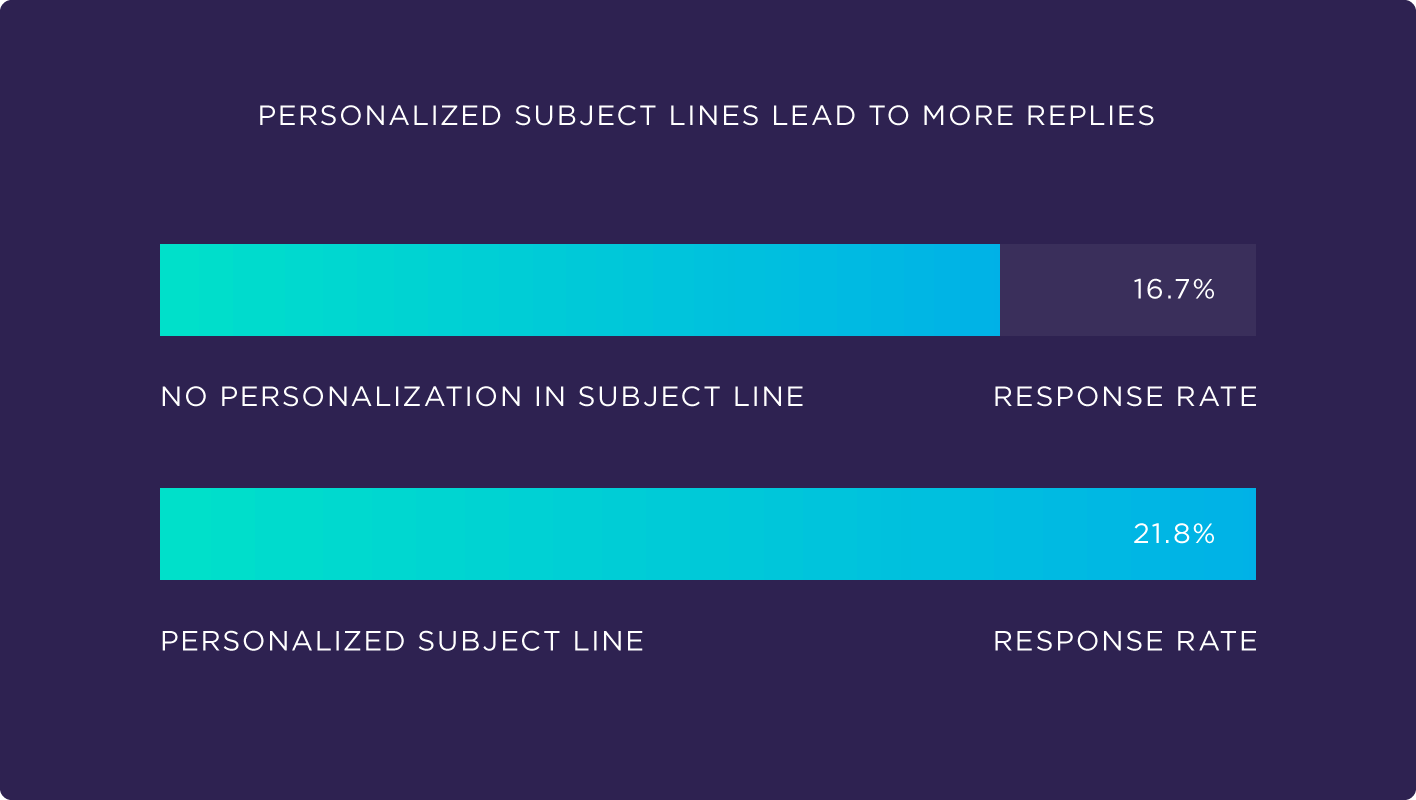
If personalization is what gets people to pay attention (which it is), doing it with purpose is worth it.
For example, if I’m pitching a link, I spell out why my link helps the target page. I’ll point to a missing section or a spot where a quick reference would add context for the website’s readers.
That way, I add value to my message. And when that’s clear, site owners are far more likely to respond.
Most non-replies are not rejections.
Your email got buried or opened at a bad time. That happens.
That’s why follow-ups matter, and Woodpecker puts numbers behind it.
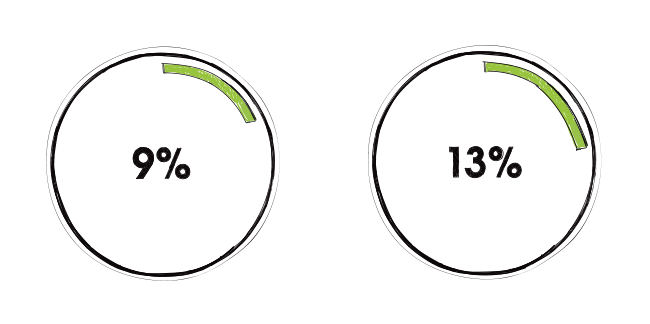
They found that campaigns without follow-ups average around a 9% reply rate, while adding at least one follow-up lifts that to about 13%.
Send a polite follow-up, keep it short, and make it easy to respond with a simple yes or no. One clean nudge that restates the context and the value is usually enough to revive the thread.
What you don’t want is the daily check-ins. Now that looks desperate.
Most people treat outreach replies like a box to tick. I found that treating every reply as a conversation is what separates you from others.
The easiest way to stay sharp is to categorize replies as they come in. Not interested, wrong person, needs more info, open but busy, asks for money, or has editorial rules….
You can use spreadsheets or CRM tools to do that.
Once you tag the thread, you stop guessing. Your next message becomes specific. And you avoid sending the same follow-up to completely different situations.
The outreach process doesn't end after you get the link. Tracking your links and their success is a part of the deal.
Anything can happen to a link, and leaving it alone while assuming it’ll stay the same is a dire mistake.
Links often get removed, edited, or moved without notice.
That’s why I always log placements, so I’ll know what’s live, what’s gone, or what actually paid off.
There are outreach platforms to do this, like Pitchbox and Respona. I still find it more comfortable to use spreadsheets.
They’re simple and easy to audit later. For extra coverage, we also run a link monitoring script that flags changes and sends alerts straight to Slack.
Now that I’ve covered every step in link building, here are the outreach emails my team and I use most at saaslinkbuilder.
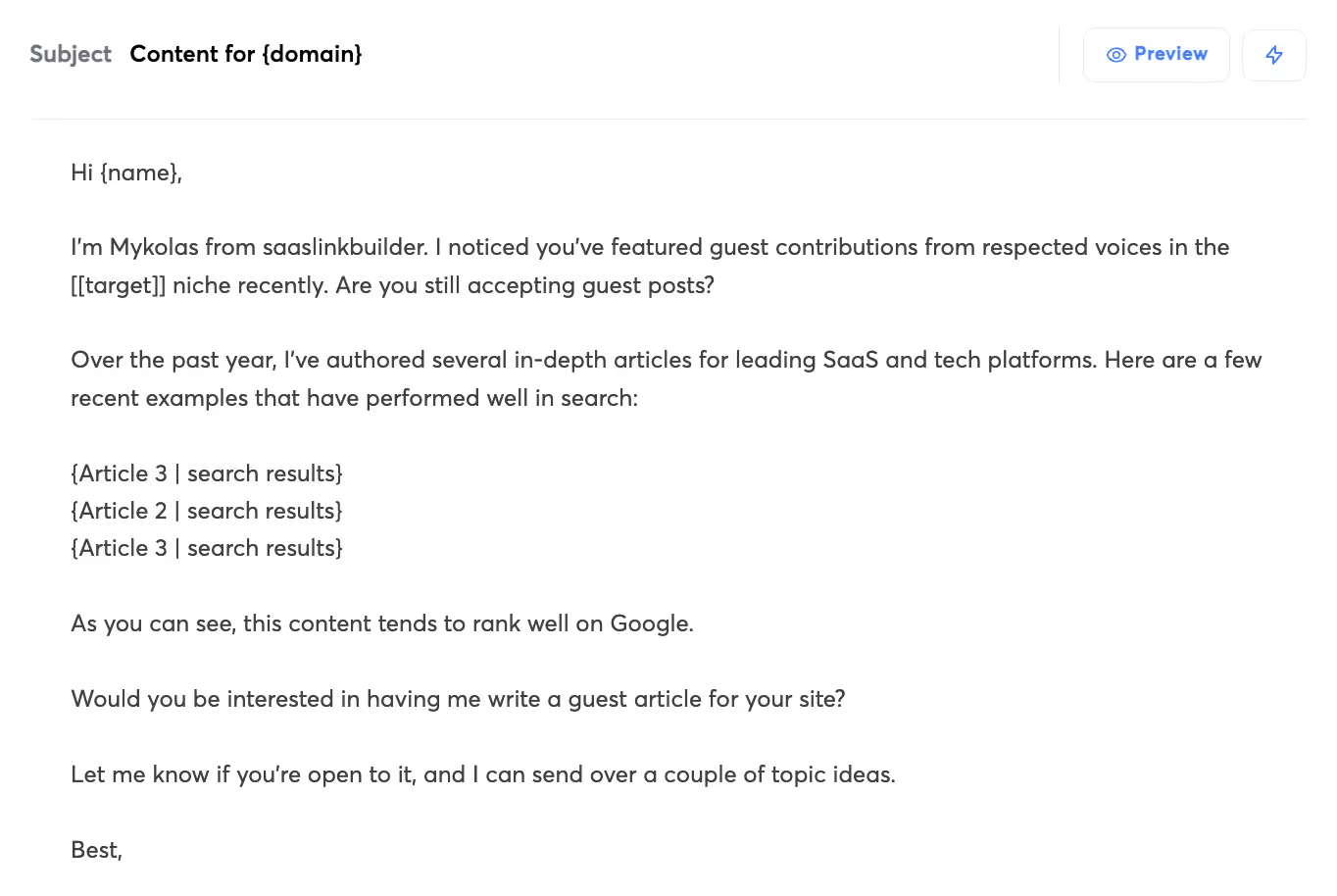
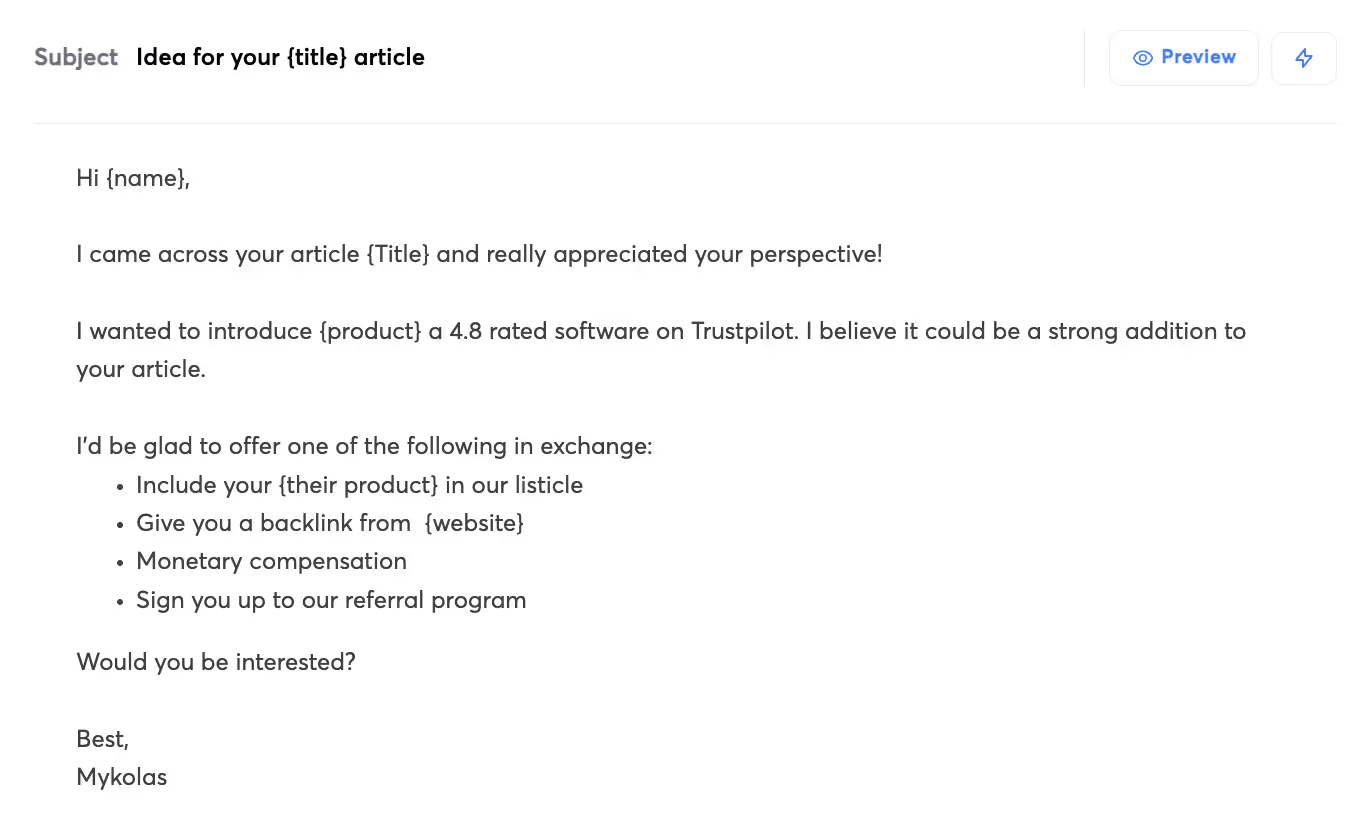
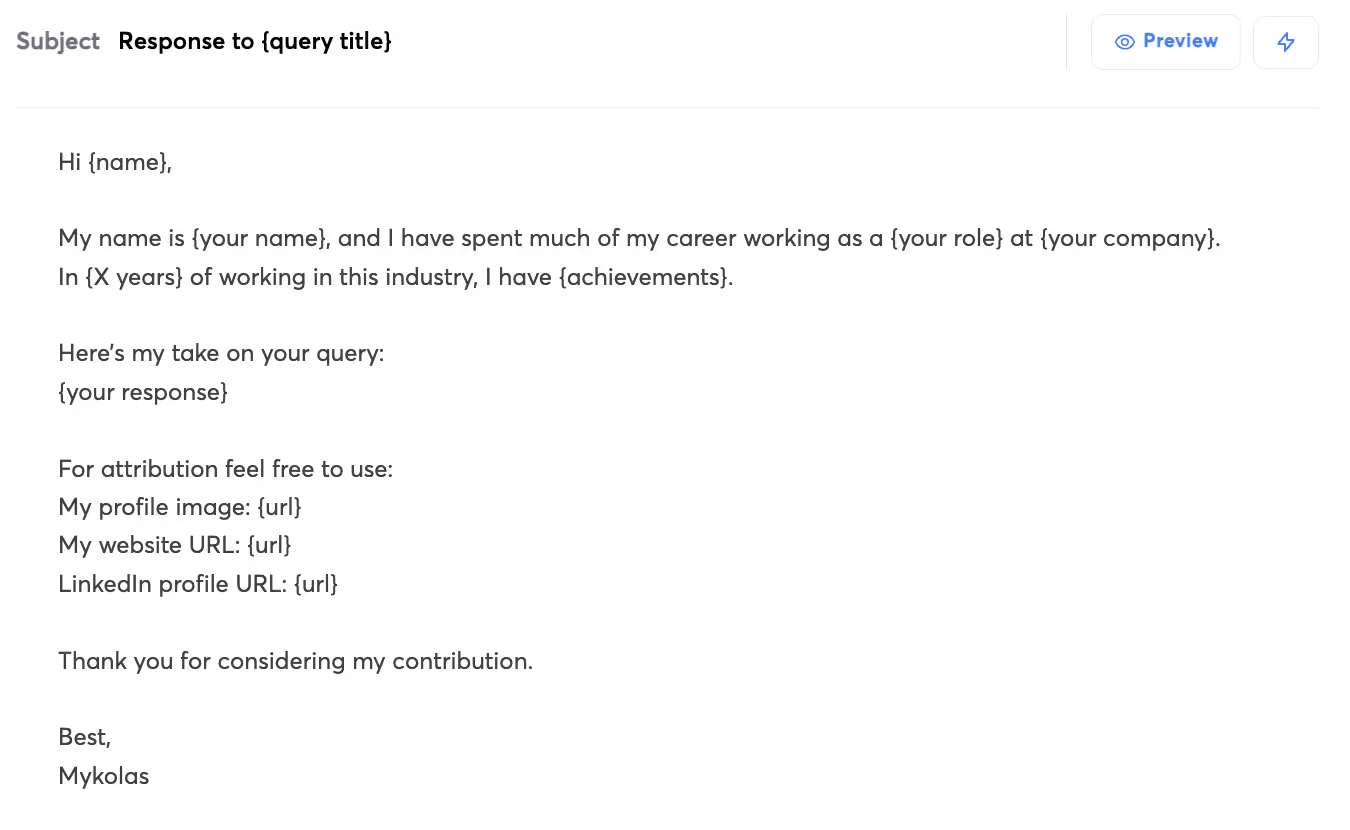

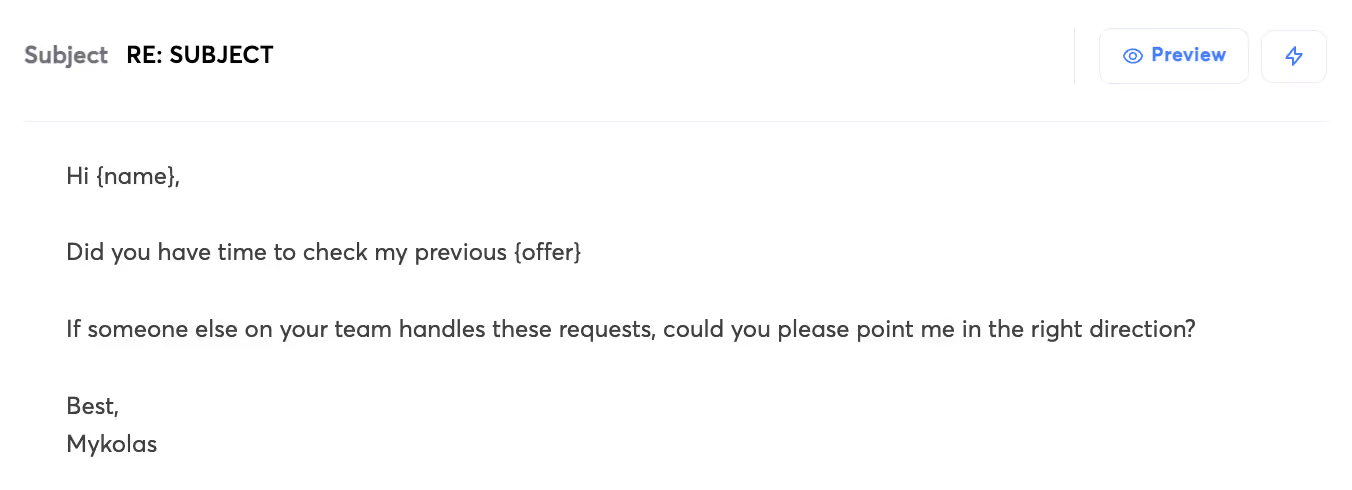
Even if you follow a step-by-step guide, outreach is a lot of trial and error. Everyone makes mistakes.
Here are the common ones I see, plus the simple fixes you can apply to your next campaign.
High DR looks good, but it does not guarantee that the link will send the right readers.
In some cases, it might not even make sense.
A cooking blog with an 80 DR linking to your SaaS page is usually a vanity win. A blog in the same niche with a 35 DR that your target audience actually reads is a better exchange.
Here’s what Chris M. Walker says about this:
“Teams often target sites that are irrelevant or low quality. This wastes effort and damages credibility. A disciplined prospecting process that evaluates topical relevance, authority, and audience fit is essential.”
Build your target list around the website's target audience, not the number in a tool.
“Loved your X post on your blog” is hardly a personalization. It is a template where you can swap names and posts. Most editors are aware of it.
Instead, prove you actually read the page and know where your link fits. Yuki Yang points it out clearly:
“Personalization is often reduced to surface-level tokens like names and recent posts, without understanding whether the content being pitched truly earns a link.”
The right way to personalize is to reference one specific detail. This detail can be a takeaway, a data point, a quoted line, or a unique example. Tie that detail to your pitch.
Most outreach fails because it feels like homework for the recipient. “Can you add my link?” makes them do work for your benefit, with no upside for them. Jason Hennessey says:
“Sending outreach emails without clearly stating the value for the recipient is a mistake. It’s not just about asking for a link; it’s about explaining why linking to you benefits them. I’ve learned that highlighting mutual value creates a stronger case.”
Value does not need to be complicated. It needs to be clear. If you cannot name the value in one sentence, your pitch is too vague.
Some outreach emails read like an ad script. They push a link, then leave the recipient hanging.
Successful outreach makes the next move obvious and easy. Here’s a piece of advice from Harry Kerry-Grant:
“If you are contacting someone to tell them that you have read their website content, whilst promoting your own, you will likely fail. There should always be a line within the email that encourages an action from the recipient.”
If your initial pitch didn’t land, the follow-ups should add context or something useful. Dennis Shirshikov sums it up:
“Good follow-ups respect timing, offer a new direction, or reframe the ask in a manner that aligns with the recipient's priority rather than pushing them.”
If your follow-ups are only there to nudge, they sound like pressure or worse, entitlement.
Bring something useful instead. Add a missing angle. Share a relevant data point. Point out a gap the editor might have missed.
Outreach is the trickiest part of link building.
Anyone can make a list and send a pitch. Yet, the hard part is earning a yes from someone who has seen every template on the face of the earth.
All you need is to be specific. When your ask fits the target page, and your email sounds like it was written by a person, replies start showing up.
Over time, that turns into something better than a one-off link. It turns into relationships that make future outreach easier.
Though if you’d rather not spend your week hunting prospects and chasing replies, I can help you. At saaslinkbuilder, we run outreach end to end with clear targets and clean reporting.
Yes. Authoritative links help Google find your content. They also help Google assess trust as search becomes more AI-driven.
A good backlink is an editorial link from a genuinely relevant page that real people read, and that sends qualified traffic.
AI Overviews and AI-style search results can cite sources beyond the top-ranking pages, so AI citation outreach has become an important part of link building, focused on earning credible mentions and citations across trusted websites.
A widely cited benchmark is roughly an 8–9% reply rate for cold outreach emails, with follow-ups improving results.

Article by
Mykolas is the founder of saaslinkbuilder and has built over 5,000 high-quality links for SaaS companies. He got his start working with top Lithuanian SaaS brands and now shares insights on link building, content marketing, and SEO.

Book a Free Consultation

saaslinkbuilder is a SaaS link building agency for Google & AI visibility
Copyright 2026 - saaslinkbuilder
