

I’ve built and reviewed 5,000+ backlinks for SaaS companies at saaslinkbuilder, working with 50+ B2B SaaS teams across cybersecurity, fintech, AI, e-commerce, web intelligence, and many other industries.
That experience has taught me what only “seems” good and what truly contributes to growth.
In this article, I’m going to break down the exact steps I use to evaluate backlink quality. I’ll go through how to evaluate domains, pages, context, and anchor text.
I’ll also share the red flags I instantly reject and explain how this evaluation process helps build safer, more relevant backlinks that support rankings, authority, and better ROI per link.
A high-quality backlink is a link that comes from a page Google already trusts and is relevant to your site. On top of that, the link must appear natural within its context.
In reality, many backlinks labeled “high-quality” are just link farms and poorly executed placements.
I’ve seen this happen countless times.
Not long ago, this potential client came to me with a very specific request. After reviewing the offer, they told me they had decided to go with a competitor because their prices were lower.
But this didn’t make sense to me, as link building involves a lot of human labor. And, acquiring quality placements on a website that’s both suitable for the client and has great metrics will not be cheap work.
So I decided to keep a tab on them. A month later, when I checked the backlinks they had built, I understood why the competitor’s service was so affordable.
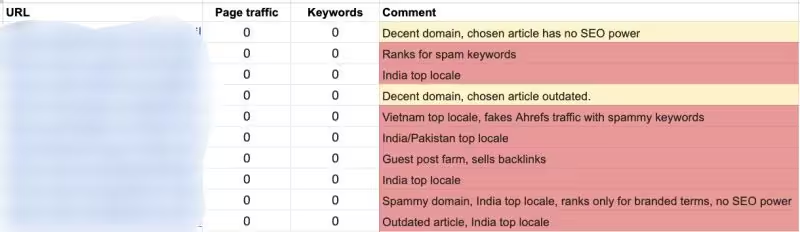
8 out of 10 backlinks were placed on low-quality domains. I’m talking about guest post farms, spammy sites, and irrelevant market locales for the client, as their business mainly sells to the US market.
Only 2 out of 10 backlinks were placed on decent domains, but one of them was in an outdated article, and the other brought no SEO value.
Even though the client eventually ended up paying less, this type of link building isn’t worth pursuing.
In the upcoming section, I’ll tell you the exact evaluation criteria I've implemented at saaslinkbuilder for building truly high-quality backlinks.
The evaluation process I use begins with the client. From there, I expand the analysis to the overall domain before narrowing the scope to a specific page.
After that, I think about where the link appears on the page and assess its context. Finally, I turn my attention to the anchor text.
Although it’s a meticulous process, I make sure I apply it to all my clients. Here’s a walkthrough of how to evaluate backlinks properly:
Before I start evaluating a backlink opportunity, I need to thoroughly understand the client’s business first.
Taking a quick look at the homepage should never be something a proper SaaS link building service crosses off its list — and I don’t do that either.
When this step is skipped, the backlinks I plan to insert become disconnected from business relevance. Needless to say, relevancy is a core component of a high-quality backlink.
There are four steps to how I go about understanding my client:
Depending on the answers I come up with, I seek opportunities where the website, topic, paragraph, and anchor text align most closely with the client’s needs.
While the domain needs to be relevant to the client’s niche, it doesn’t end there. I place equal, if not greater, importance on domain metrics and quality signals.
I only count a domain as legitimate if it has real brand signals. That means proper About and Contact pages, third-party reviews, and details I can cross-check to make sure the brand is real.
I also look for proof of real people behind the content. Named authors help a lot here because a quick check is usually enough to see whether the names are legitimate. Take a look at the author bio section of this TechRadar blog post:
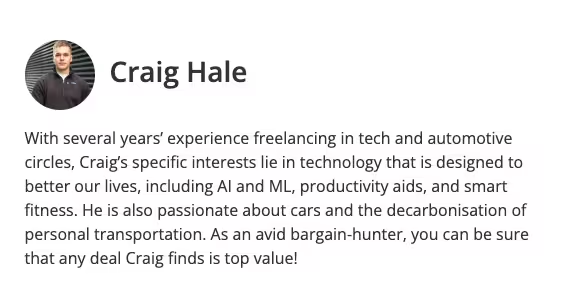
It takes me several seconds to verify the authenticity of this profile, which is a good sign.
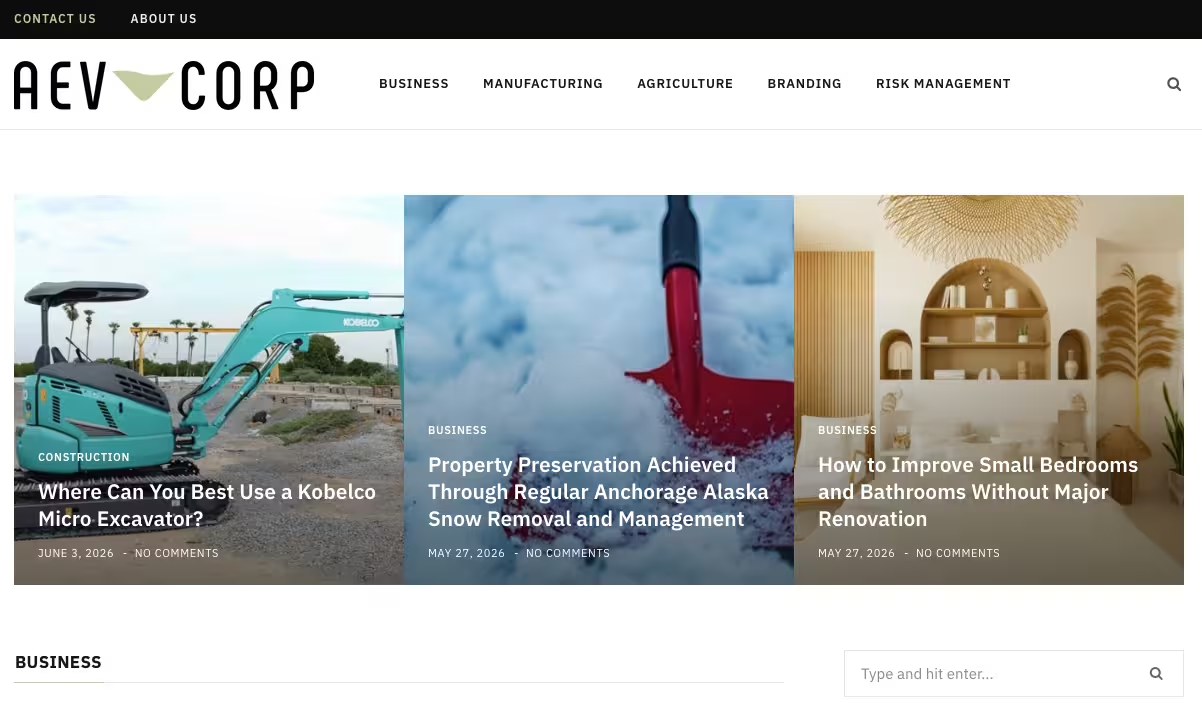
Spammy websites invest in metrics that look good in an Ahrefs report, but they rarely invest in building a brand, audience, or editorial standards.
These websites usually have no real audience and no consistent topical authority, so they bring more risk than value. Steer clear of sites that look like this:
To build a quality backlink, the domain needs a valid reason to talk about the client’s product or industry.
This matters because Google doesn’t just consider where your link comes from; it also looks at whether the link makes contextual sense.
When I factor in topical relevance, I reduce the risk of building unnatural backlinks that could be flagged while creating value for the client.
I check organic traffic quality as the last step of my domain evaluation to see whether a domain is worth pursuing for my client.
I make sure the top traffic locale matches the client’s target audience. If the client mainly sells to the US market, it doesn’t make much sense to choose a domain with most of its traffic coming from unrelated countries.
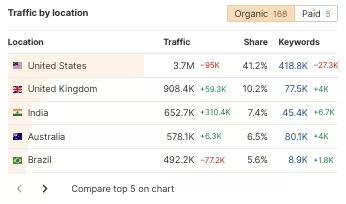
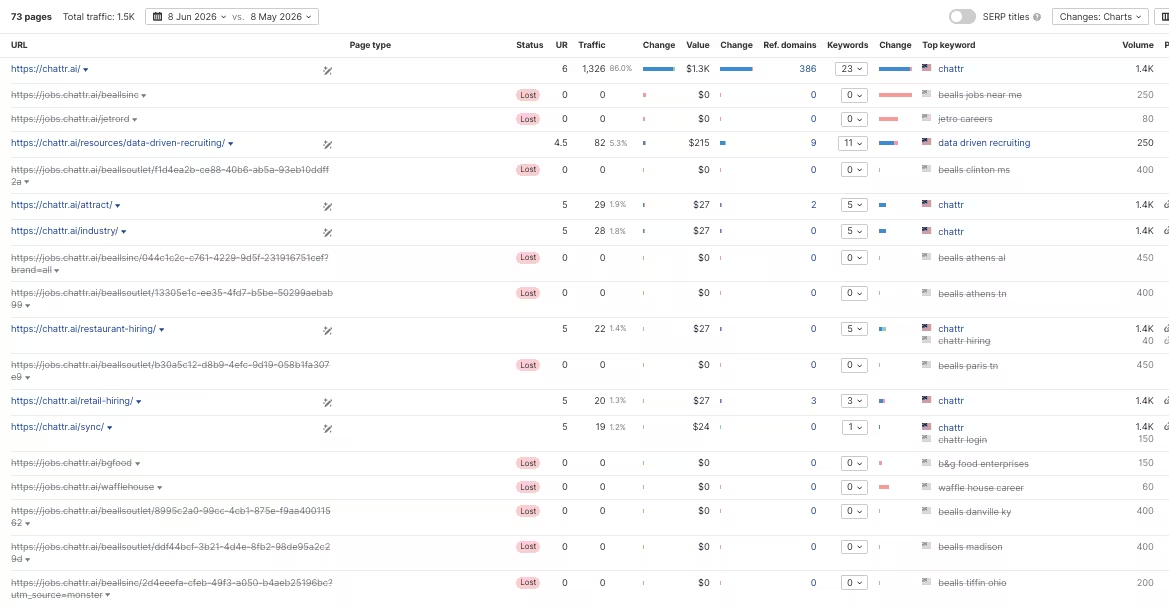
Another step is evaluating the domain’s top-performing pages and keywords. The pages should be legitimate, original, and relevant to my client’s niche, and the keywords the site ranks for should be of high quality.
Ideally, the top 3 pages should not generate 50% of the total site traffic. This usually suggests unstable or manipulated metrics, so I treat it as a warning sign.
If the domain gets a pass, I start evaluating the page.
At this stage, I check whether the page topic makes sense for the client’s product or niche.
A domain can be relevant overall, but that doesn’t mean every page on that domain is a good fit. The page still needs to be closely related to the client’s niche.
For example, if the client’s product is a project management tool, I’d rather place the link on a page about workflow management or productivity software than on a generic business article.
Topical relevance creates a great opportunity to build relevant backlinks, but if the page is not indexed, then it won’t appear in SERPs. This means the backlink I place will have limited SEO value.
Using the Google search operator “site:domain.com” will show you whether the page is indexed.
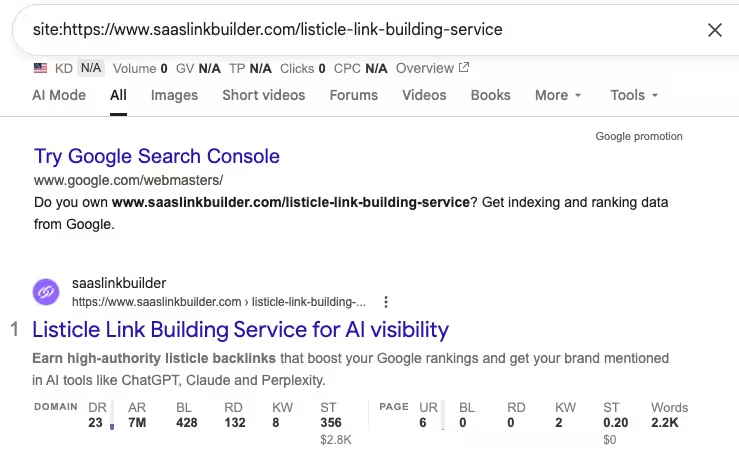
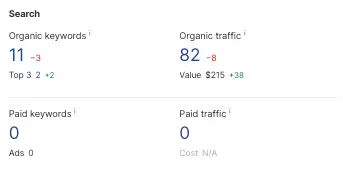
I also check whether the page brings organic traffic and already ranks for keywords. This shows me that Google trusts the page enough to show it in search results.
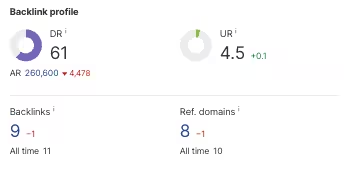
Finally, I check if the page has any links pointing to it.
A page only provides value if the content on it is high quality.
When I see a generic text block that was clearly written around a link placement, I treat it as filler content created mainly to host backlinks.
Google considers this risky because content and links created to manipulate search rankings can violate its spam policies.
Directly from Google Search Central:

While not a ranking signal, Google’s E-E-A-T is a good benchmark I use when evaluating content. High-performing sites will adhere to all four: experience, expertise, authoritativeness, and trustworthiness.
I also check whether the content is well maintained.
Outdated pages can make a backlink less valuable, especially if the topic is subject to frequent change. For example, the best SEO strategies in 2025 will not necessarily be the same in 2026.
That’s why I always check whether the page is still fresh enough, ideally no more than 1.5 years old, to be trusted.
A backlink can come from a domain with stellar metrics and a relevant, near-perfect page — if it reads awkwardly, it will lose value. That’s why context is an important element to evaluate when backlinks matter.
Ideally, I prefer backlinks to be placed inside the body of the content.
While links in the introduction or conclusion can still work, they are easier to make look unnatural.
That’s why body placement gives the link more room to make sense and gives the backlink a cleaner editorial reason to exist.
Placing a link in the body doesn’t automatically make it perfect. If a random sentence is added to a random part of the article, it will lack editorial judgment.
Most importantly, naturally incorporated backlinks look earned, not bought. And that’s what I strive for.
What I mean by surrounding context is the sentence carrying the link and the paragraphs around it. All components should support the same idea.
This helps preserve the flow and logical integrity of the article. When the link blends in without a problem, it explains a point or solves a problem. In other words, it adds value instead of creating confusion.
When I evaluate the surrounding context, I also make sure the client is mentioned in either a neutral or positive way. Negative remarks don’t contribute to my efforts, and they can harm the client’s reputation.
Anchor text tells both users and search engines exactly what to expect on the linked page. That’s why a good anchor text should clearly indicate where the reader will land when they click the link.
If the anchor text is too vague, awkward, or forced, it doesn’t give enough context to the reader or the search engines. Here’s what I look for in anchor text:
The last point is the link attribute. For a backlink to serve its SEO purpose, it should be dofollow. Search engines treat dofollow links as standard editorial links.
This is where SEO value passes from the linking page to the client’s page, which is what I want from a link, especially if my main goal is to build authority.
That said, a backlink profile doesn’t need to be 100% dofollow to be healthy. It can include nofollow links, too. But since nofollow or sponsored tags don’t help me with my goal, I skip them.
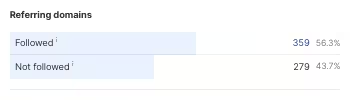
Some websites aren’t even worth considering. Here’s a list of red flags I don’t accept:
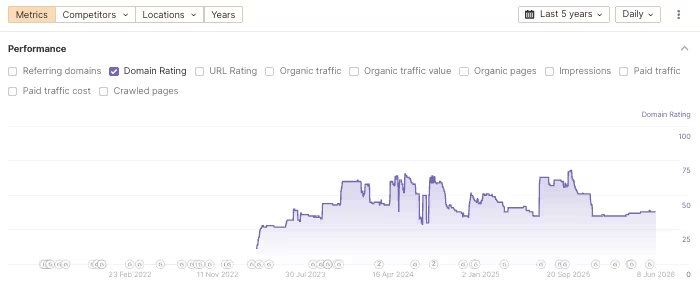
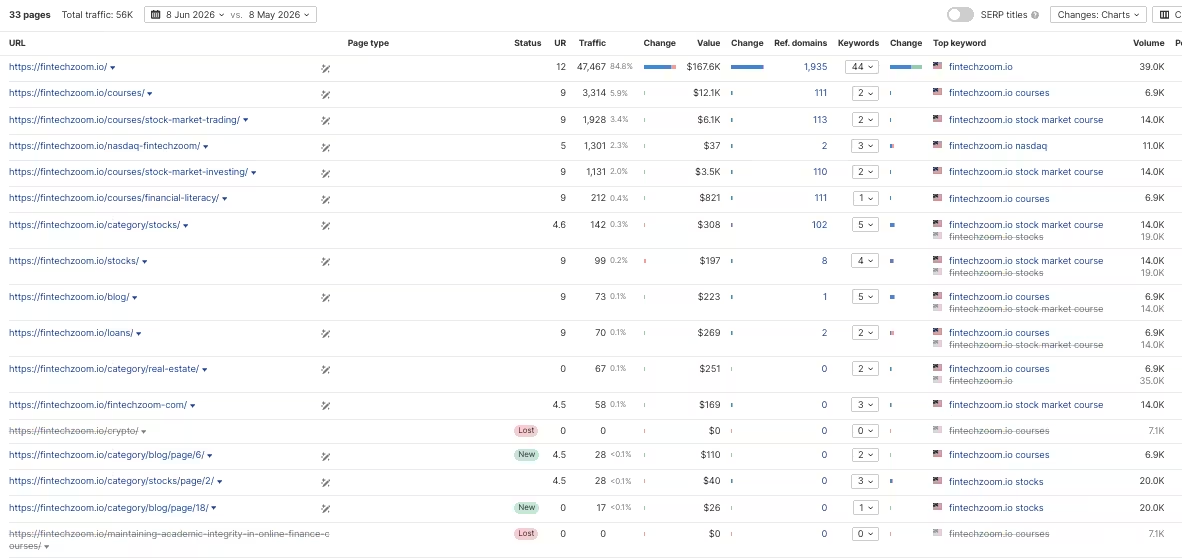
For the entire process I’ve talked about so far, I mainly use Ahrefs or Semrush. If one of these is available, that’s enough to start evaluating backlink quality.
Both tools give me enough data to check all the metrics I mentioned, especially when the evaluation requires quantitative data, as it does for domain and page evaluation.
For qualitative areas like context and anchor evaluation, I rely more on the expertise and judgment I’ve developed from working on link building strategies for SaaS websites.
A proper backlink evaluation helps me build links that are worth having and are of high quality.
When a backlink passes all the steps I mentioned, it provides off-page SEO value that contributes to building authority and trustworthiness for the websites I work with. Google cares about these signals.
And improved rankings are an undeniable outcome that comes with the benefits of backlinks.
Plus, when I do my due diligence, I reduce the risk of low-quality links negatively impacting my client’s site. Poor-quality backlinks hurt the backlink profile and have a higher chance of being ignored by search engines.
When that happens, the client wastes budget on links that don’t bring a positive outcome in the long run.
Eventually, making sure the backlinks are high quality leads to higher ROI per link for the client because the budget goes toward placements that support rankings, visibility in AI platforms, and authority as intended.
Backlink quality isn’t something I evaluate based on one metric alone. A good backlink has a lot of work put into it. That’s why I follow a full, thorough evaluation process instead of trusting how it appears on the surface.
At saaslinkbuilder, I put this level of effort into every single backlink I build, with no exceptions for any client I work with.
If you are looking for the best SaaS link building agency for your website to handle the heavy lifting that comes with backlink evaluation, I’m here to help. Book a call with me today, and let’s chat.
No, domain authority can easily be manipulated or inflated, so it should never be the only metric used to judge backlink quality.
If a website publishes content about too many unrelated topics, has suspicious metrics, and links to spam sites with no clear reason — you know it’s a link farm.
Yes, ideally. A backlink that comes from a page with organic traffic is more valuable, as Google already understands what the page is about and has already indexed it.
Usually, low-quality backlinks hurt by wasting budget rather than directly damaging rankings. Search engines often ignore or devalue spammy links, so the client pays for placements that bring no real SEO value.

Article by
Mykolas is the founder of saaslinkbuilder and has built over 5,000 high-quality links for SaaS companies. He got his start working with top Lithuanian SaaS brands and now shares insights on link building, content marketing, and SEO.

Book a Free Consultation

saaslinkbuilder is a SaaS link building agency for Google & AI visibility
Copyright 2026 - saaslinkbuilder
